

Stranger Things Has Serious Foundational Problems
And none of them have anything to do with “fan fatigue.” They were baked into the show from Season One.

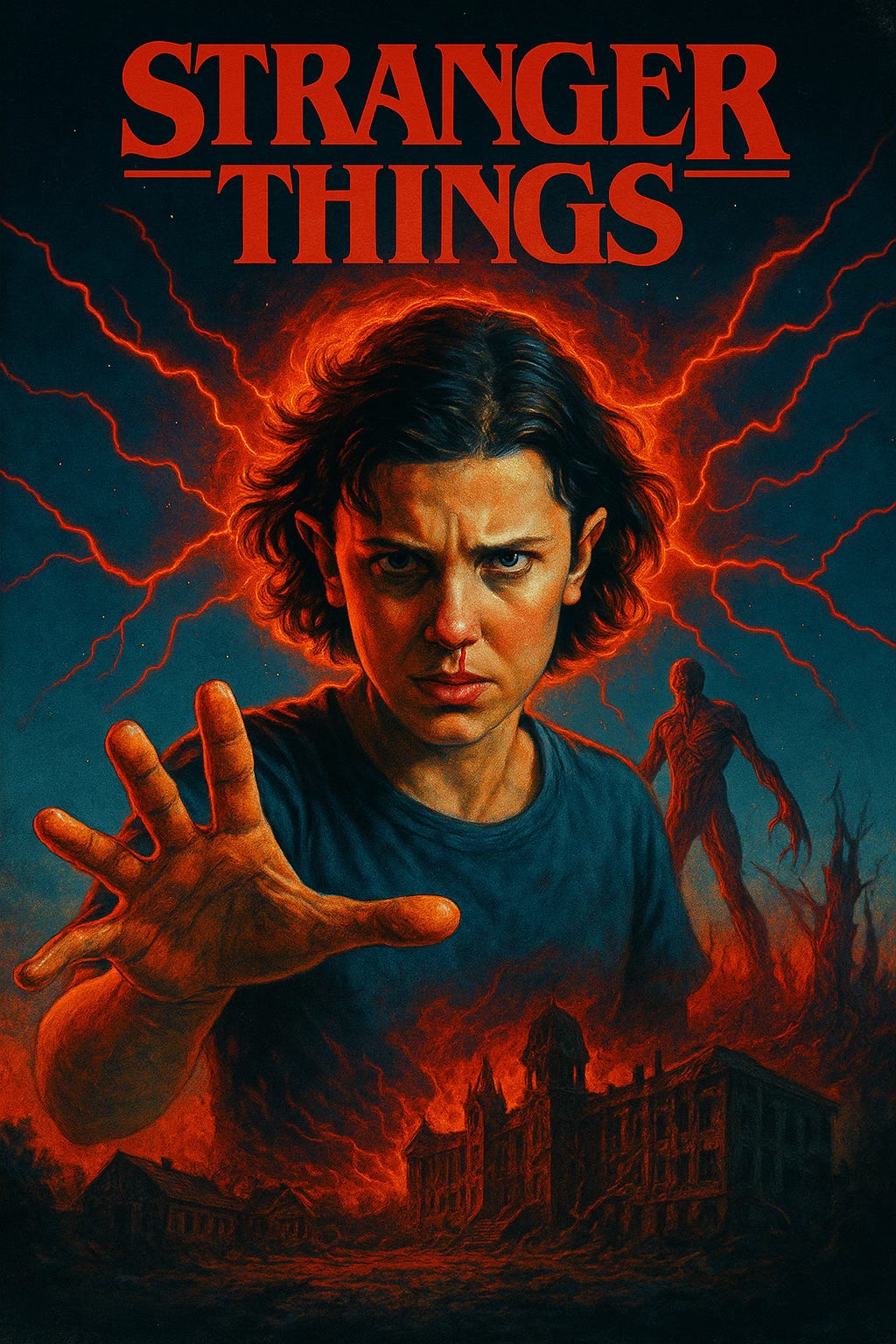
My Darklings, you know the deal. I don’t do a review of a TV show until the season is completed. I will make an exception for something as startlingly incompetent as the Rings of Power but Stranger Things is nowhere near that bad and this season has gotten the King Solomon and baby treatment, the second half doesn’t come out until Christmas, so it’s going to be a while.
That said, Stranger Things has some critical problems and they are not going away because they were baked in from Season 1.
Indeed and truly, Stranger Things biggest problem is that it was never meant to be more than a one season wonder. The Duffer Brothers clearly didn’t expect it to be the phenomena that it became. The first season turned out to have a surprisingly broad spectrum audience, it brought in Gen-X table top gamers, Stephen King horror fans, Gen-Z Neo-80s Kids, and Riverdale Tumblrinas (#Justice4Barb).
But then it was renewed, and renewed and renewed. This was a single story building that was never going to bear the weight of a five story structure.
So what are the problems with foundation of this building?
1. The Mystery Box Was Never Built to Scale
Season 1 of Stranger Things works because it is small, intimate, and fundamentally closed. It’s a Spielberg callback, it’s a Stephen King tribute band, and its the cultural memory of the last decade of the United States where the country worked as advertised. And it was all wrapped in a tight, self-contained mystery box.
Perfect for eight episodes.
Terrible for indefinite serialization.
A mystery box is a high-pressure storytelling device: you either open it right away (and risk disappointing people), or you keep adding more boxes (and people get bored or angry). The Prisoner is a perfect comparison. Everybody who gets it, says it’s a masterpiece. BUT, if Patrick McGoohan had been forced to make five seasons, people today would be moaning about how that show went down hill fast the same way they are now griping about Stranger Things.
Mystery-box storytelling cannot support long-term narrative expansion.
2. Cast Bloat and Battleship-Grade Plot Armor
The cast of Stranger Things grew out of control. At this point, the show is like a D&D party with 19 player characters. All of them are required to get spotlight time, all declared to be “essential,” and all dragging enormous plot armor behind them the size of Yamato’s anchor.
Every season adds new characters, new subplots, new sidequests. And the old characters never leave. The result is screen time dilution. Characters who mattered—Jonathan, Nancy, Will, even Mike—slowly get pushed to the narrative periphery but never out of it because their story arcs aren’t permitted to reach their conclusions.
The writers can’t kill anyone because Netflix won’t risk losing a merchandising asset, so every major emotional beat becomes a fake-out death or a near-death. There is no danger. No consequences. No stakes.
And without stakes, a supernatural horror show becomes a hangout show with monsters. Supernatural did it better.
3. Netflix Executive Interference (The Robin Problem and Beyond)
Robin is the canary in the Upside Down coal mine.
In Season 3, she is coded, performed, and deliberately framed as Steve Harrington’s developing love interest. The chemistry is intentional. The blocking is intentional. The camera lingers on them the way it never lingers on platonic pairs. When the Russians start to torture Steve, Robin’s scream of “NO!” is obviously for a boy she’s in love with. The arc follows the structure of a slow-burn romance.
Then—in the last ten minutes—she announces she’s a lesbian.
This wasn’t story logic. It wasn’t set-up. It wasn’t foreshadowed. It was a rewrite, and it reeks of executive mandate. And it’s not the only time the show suddenly pivots into corporate-driven “course corrections” that break character arcs, undermine earlier seasons, or feel like checkbox compliance.
No, this isn’t a complaint about representation. It’s a complaint about bad writing caused by people with spreadsheets standing over the storytellers’ shoulders.
4. Eleven’s Power Has Become Pure Plot Convenience
This wasn’t a problem in Season 1, because in Season 1 her powers were limited because, she was learning them.
The audience accepted inconsistency because the character herself was inconsistent. She was a traumatized child with anemia induced by frequent nosebleeds and a handful of barely controlled abilities. That worked just fine, because it wasn’t meant to be a superhero origin story.
But five seasons and nearly ten real-world years later, Eleven’s power has become whatever the plot needs it to be.
Need remote viewing? Hand me the remote.
Need telekinesis strong enough to throw a van? Okay, lets try it Hey, look at that!
Need a psychic duel? Shazam!
Need her not to be able to do any of that this week? Well shit, she’s “blocked.”
Need an entire monster army held at bay? Turn the dial to 11—literally.
Her power set expands and contracts like an accordion depending on what the writers need to have happen. And because she is the lynchpin of every major Upside Down event, her inconsistency becomes an audience expected narrative cheat code. Whenever the Duffers need to stall the plot, her powers suddenly fail. Whenever they need a climax, Eleven screams and the limiters vanish.
In storytelling terms, that’s catastrophic.
Superpowered protagonists require rules. The audience doesn’t need a physics textbook, but they need boundaries, costs, and consequences. The more undefined Eleven’s power becomes, the more it functions as a deus ex machina.
It leads to two major problems:
It undermines tension.
When the audience knows Eleven will overcome whatever her bullshit problem is this week, it destroys the stakes.It destabilizes the entire ensemble cast.
Every single other character has become a sidekick. They are either Elle’s mascots, or emotional support humans. Not because they lack value, but because Eleven’s godlike (when convenient) powers invalidate their relevance whenever the story needs a win.
This problem wasn’t baked into Season 1, but it metastasized from Season 2 ownward.
Season 1 Eleven was a mystery and mysteries have potential.
By Season 5, she’s become a living plot patch.
The Duffers never defined what she can or cannot do—so now she can do everything, except when she mysteriously can’t, because that episode would end too soon. Quick! Bring in one of the many, many side characters and have them do something until it’s time for Elle to do something.
This is the hallmark of a show running on fumes.
The show keeps doing this:
Character arcs retooled without foundation. Shit, we had to make Robin gay so now Nancy is interested in Steve again until she isn’t.
Themes are inverted between seasons.
Season-finale promises abandoned without explanation
Sudden personality rewrites that ignore earlier characterization. Season three Hopper was the worst example of this kind of reset.
You can hear the spreadsheets crinkling.
5. Pick. A. Fucking. Tone.
The show’s tone lurches violently from season to season.
Season 1. It was a straight up 1980s Stephen King horror story with kids. It was IT without the really gross part. Instead, you had a sweet first love story that ended in tragedy. It worked amazingly well, and then Netflix ordered a second season.
Season 2 was adventure with some horror.
Season 3 was neon comedy with monsters.
Season 4 was hard horror again, but also metal album cover, but also 90210, but also war movie.
The show’s tone shifts wildly season-to-season. The tone even changes from episode to episode. This means that:
Internal creative vision has fractured.
External forces (meaning Netflix) are dictating the tone shifts
The writers are chasing trends (they’ve got nothing else they can do, the show was never meant to last more than one season).
Consistency is the backbone of worldbuilding. Without tonal consistency, even strong arcs feel disconnected.
6. A Race of Immortals
No. One. Dies. In. Hawkins.
Okay, Billy, Eddie and Barb did. That was nice but no one else has kicked the bucket.
Everyone:
survives
returns
is fake-killed
nearly dies but doesn’t
gets revived
This makes the horror elements toothless.
If no one meaningful can die, the Upside Down isn’t a threat—it’s a very messy nuisance
7. I Loved the 80s too, But…
The biggest problem with the tonal inconsistencies is the Duffer Brothers insistence on thematically tying each season to movies that were big in or near the year the stories are taking place in.
Season One: Firestarter on Elm Street
Season Two: Ghostbusters vs Gremlins
Season Three: Red Dawn on the Day of the Dead
Season Four: The Hellraiser Elm Street Dream Warriors
Season Five: And now we are in 1987. The Stand of the Lost Boys. And maybe Aliens too.
Such a pity, that was also the year that Predator, Robocop and the Running Man came out. The possibilities would have at least been amusing.
Stranger Things is out of gas and’s not because 80s nostalgia had a sell-by date, or the audience “got tired.” How can you get tired of something that has almost never been on for the past ten years? What was a tight little mystery box story that knew what it was trying to be, grew uncontrollably into a endless maze.
Although, the perfect 1988 series wrap up considering the conspiracy science induced psychic powers, government coverups, and extra dimensional monsters would be:
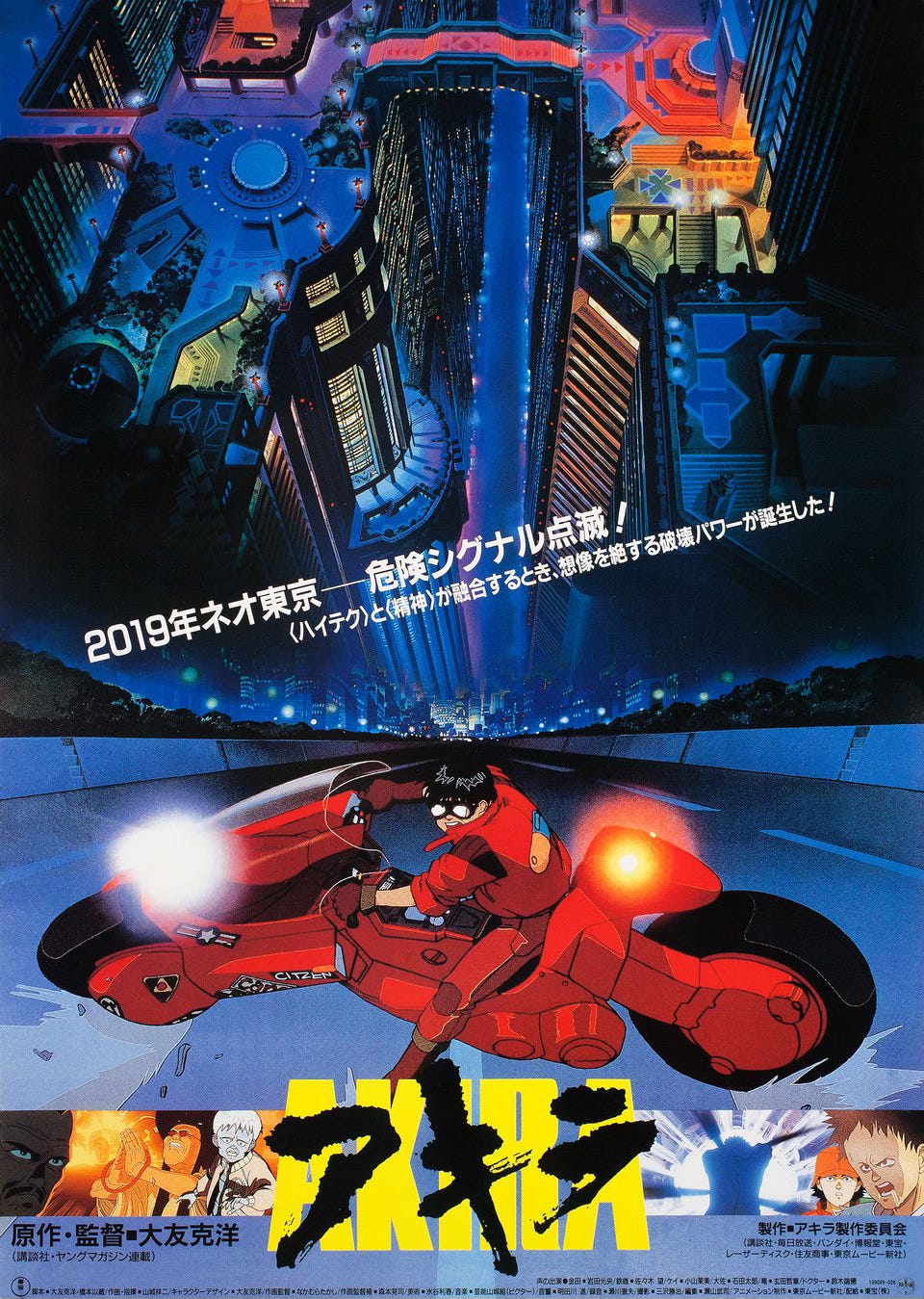
Forget it! There is no way in hell this show is that cool.
Not anymore.
Discuss in Comments Below
Good post. I never continued watching Stranger Things after season one, it just felt unnecessary. It end very nicely, a rarity these days. So, that’s where it ended for me.
This is good- as an aspiring showrunner, I need to be able to push back at the suits if they give me trouble. I can use this as an example.