

The Dark Herald Recommends – Demon Slayer: Infinity Castle
They should have added a Part One

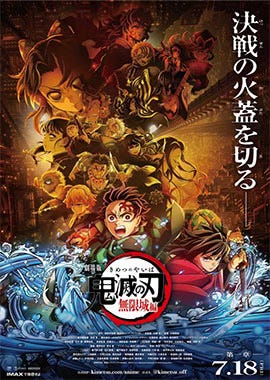
This. Is. Not. An. Entry. Point.
If you are not familiar with the Demon Slayer series, then I can safely give you a The Dark Herald Does Not Recommend for it. Or to be more exact: Does Not Recommend Until You Get Caught Up.
This movie is a direct sequel to TV’s Demon Slayer: Kimetsu no Yaiba – Hashira Training Arc, and the film picks up just as the Demon Slayers enter the Infinity Castle. There is almost nothing in the way of recaps. You cannot get caught up if you are a first timer watching this.
The stakes will mean nothing to you.
But if you have been following the story already, then this film is definitely a don’t miss.
Keep in mind the cast for this two-and-a-half-hour movie is somewhat limited, so I can’t guarantee you’ll see your favorite character. If Nezuko is your mute waifu, bad news, she’s barely in this one.
The Movie Itself
Infinity Castle is Ufotable doing what Ufotable does best: spectacle. The studio has always blurred the line between traditional hand-drawn anime and digital compositing, but here they push it to the edge. The castle itself is a marvel of Escher-inspired geometry—rooms folding into each other, floors twisting into ceilings, staircases breaking every rule of physics but never looking cheap or video game–like. It feels alive, as though the architecture itself is a hostile demon.
The opening act wastes no time plunging the audience into combat. There are no leisurely setups—just relentless pacing as the Hashira are separated and thrown into their respective battles. Structurally, this makes the film feel like the opening salvo of a larger war rather than a self-contained story, which it is. This is Part One, and it plays exactly like it: setup, stakes escalation, and brutal cliffhanger.
The action sequences are breathtaking, even by Demon Slayer standards. The fights are staged with a clarity that most Hollywood blockbusters have forgotten how to achieve. You always know where the characters are, what they’re doing, and why it matters. Colors blaze across the screen—fiery oranges of flame breathing, deep blues of water breathing, harsh insect purples of Shinobu’s poisons—all painted against the black void of the castle. The sound design deserves its own praise: every clash of steel and howl of a demon echoes with weight, anchoring the fantasy in tactile reality.
Character-wise, this installment belongs to the Hashira. Tanjiro remains the series’ emotional center, but here he steps aside often to let the top-ranked demon slayers finally show what they can do. Some arcs that were only hinted at in the manga are given full cinematic treatment, and the results are intensely satisfying. The cost of that focus, however, is that the emotional bond between Tanjiro and Nezuko—the series’ beating heart—takes a back seat. Their relationship has always been the soul of Demon Slayer, and its relative absence here is felt most sharply.
Narratively, the film is a war of attrition. The Hashira are strong, but Muzan’s upper demons are stronger, stranger, and more terrifying than ever. There’s a palpable sense of desperation, of heroes being ground down even as they give their all. Unlike the Mugen Train film, which told a complete story with a beginning, middle, and end, Infinity Castle (Part One) is the first step in a marathon. It’s brutal, exhilarating, and incomplete by design.
Liminal People from a Liminal Land in a Liminal Time
Setting a story like this in the Taisho era of the nineteen tens and twenties was a very deliberate choice.
Picture in your mind’s eye a Tokyo businessman in late middle age wearing a three-piece suit with bowler hat, shambling out of his imported Ford Model T and trotting in unseemly haste into his fashionable townhouse because he heard the phone ringing.
He knew he’d have to answer it himself because there was no way in hell old Kiku-baa would answer it. Sure enough, there she was, glowering at the phone from across the room, smacking her toothless gums at it in disdain. He knows he should be harder on her, but the old nursemaid has been one of the few constant fixtures in his turbulent life.
“Mōshimasu, mōshimasu” (I speak, I speak).* He couldn’t tell for sure what was said next over the crackling line but it sounded like an interrogative. “Hai, Yamada de gozaimasu” (Yes, this is Yamada speaking). Oh, it was his son-in-law. While he talked or rather shouted at the phone, Kiku-Baa helped him roughly out of his jacket and gently into his kimono (truthfully, it was more comfortable). Ah, they’d be bringing the children along this weekend. Good, that would keep old Kiku-baa both happy and out of his way.
His daughter had supposedly found a widow whom she thought was suitable. He did need a new wife and the idea of taking one of these young moga girls with the too short hair was ridiculous to him. He wanted someone who could speak his language. Who had seen the things he’d seen.
After dinner, he walks past the Tokonoma where his old swords are kept on display. His eldest grandson is all hot to learn how to use them. “Kendo,” they call it now. It seems pointless to him but he can’t help but be pleased at his grandson’s martial spirit. Looking around surreptitiously, he lifts his Katana from the display. It once declared his status to the world but had now been illegal for him to wear them for decades. He practices, with creaking joints movements that once felt as natural as breath to that young samurai he had been. A boy who could not have imagined that that which had always been would be gone forever in his lifetime.
The Taisho era was an age where the ancient beyond measure was still living cheek to jowl with the hyper-modern. A Japan that wanted to take its place in the world of today as a great power also wanted to keep one foot planted in the past.
An age where you could ride a steam locomotive into Tokyo, then walk home through lantern-lit alleys that hadn’t changed since Ieyasu Tokugawa ruled with an iron hand. Where a man in a bowler hat might pause in front of a Shintō shrine to clap his hands and pray for business luck. The modern and the ancient weren’t really in conflict — but they were uncomfortably sharing the same house.
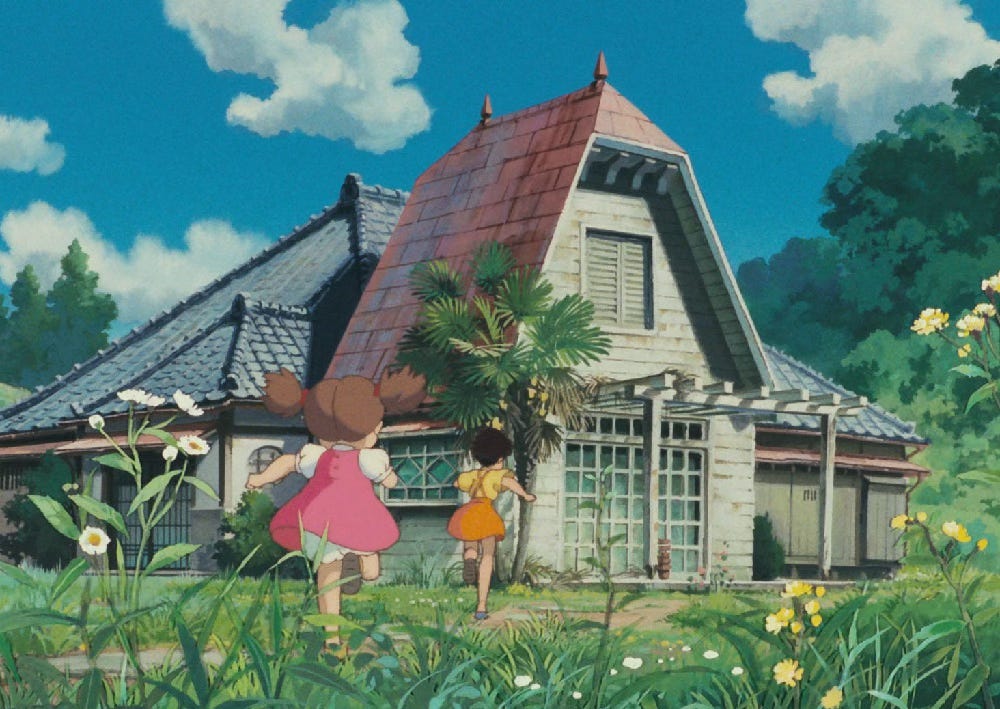
The Taisho era was a time where the barrier between two worlds was present but as yet remained unstabilized. It feels natural to the Japanese that something unnatural could easily slip in through this porous border.
Something also unfixed and unsettled is the world of Japan’s mountain clans. Due to their sheer geographic isolation, the people who live there have always had a reputation for being somewhat uncanny. In the rest of Japan the rule of the Samurai was absolute, but in the mountains it was barely more than a firmly worded suggestion. Mountains weren’t just home to brigands and rustics although they certainly were that. It was the last realm of the ancient people of Japan who’d been pushed out when the Yamato Japanese first landed. These were the wildmen, the unknowable men whose connection to nature runs deeper than the roots of their mountains. They were the hunters and shamans whose connection to the mountain Kami and Yokai are those of blood and bone. They were the mountain gods’ retainers. And what little truth there is in the mythology of the ninja, it can be found in the mountains of Koga and Iga.
The folklore surrounding the mountains and the people who live there was and remains today, something viewed as spiritually dangerous. Tanjiro’s who made his living burning and selling traditional charcoal and his sister falls into these myths very easily.
To the city Japanese of the Taishō era, the mountains weren’t just far away, they were another world. A land of strange clans and uncanny practices, where old gods still lingered. That is exactly the world Tanjiro comes from. He isn’t out of place fighting demons with a sword, because to a mountain boy, the border between natural and supernatural was never all that firm.
In the conflict between the realms of Law and of Chaos the mountains remained firmly in the land of Chaos.
Tanjiro’s kimono further reinforces this projection, worn over his school uniform, (symbolizing modernity), its green-and-black checkerboard pattern (ichimatsu moyō) is both bold and simple. The alternating squares create a balanced, rhythmic repetition, representing his attachment to the seasons of nature. Constancy, eternity, and steady growth are his personal hallmarks and is the core of his fighting style, which is the foundation of all of the other schools of demon fighting.
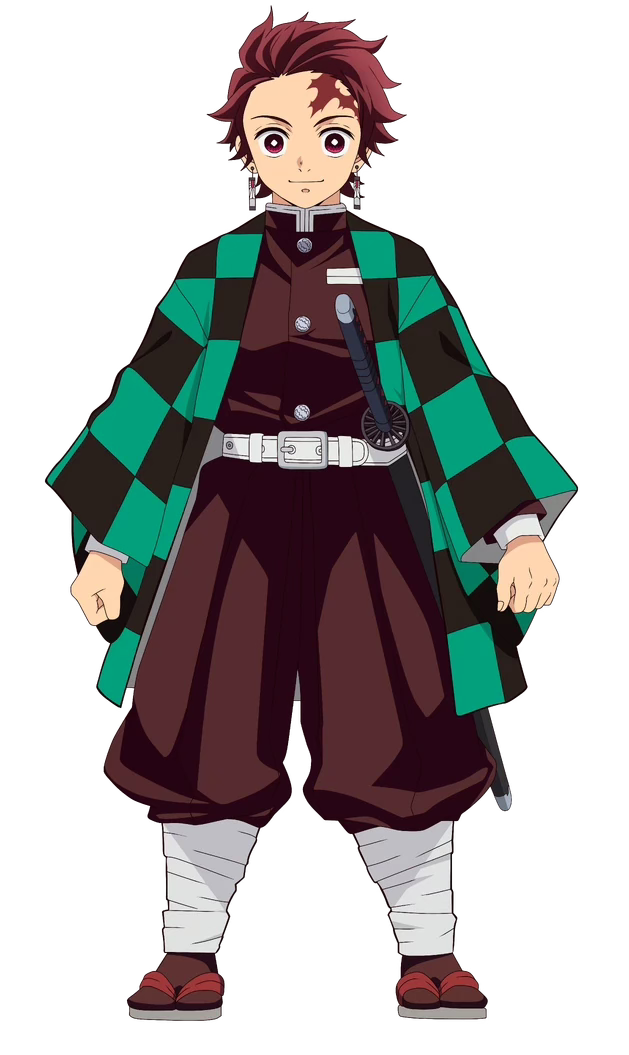
Tanjiro himself becomes the embodiment of this Taishō liminality. He carries a sword that belongs to an older, fading world, but wears it over a uniform that marks him as a child of the modern one. His checkered haori doesn’t just identify him visually; it ties him thematically to the era in which he lives—caught between continuity and change, between the known and the uncanny. Demon Slayer thrives in that tension, and Infinity Castle (Part One) pushes it to the forefront, using its setting, characters, and visual design to remind us that this is not simply a story about monsters, but about a country perched on the threshold of two realities.
Wrap-Up
Set Demon Slayer in Edo, and it’s just another period piece. Set it in Shōwa, and the age of the sword would already feel dead. But Taishō? Taishō is the hinge where both worlds holding hands still made sense. That’s why the story feels natural. Of course there would be demons. Of course there would be boys with swords hunting them. In the Taishō years, the border between worlds hadn’t quite shut yet.
Infinity Castle (Part One) isn’t a film for newcomers, but for those already invested it’s a triumph of animation, atmosphere, and escalating stakes. It is not the conclusion. It is not even the middle. It is the beginning of the endgame—and that’s exactly why it works. It delivers on everything that makes Demon Slayer compelling while promising more to come.
Final Verdict: The Dark Herald Recommends with Enthusiasm (4.6/5)
*It would eventually drawl its way to the modern “moshi-moshi”
Looks like I might have to play catch up....
Watched this with my family over the weekend. Demon Slayer on the big screen in a theatre never disappoints. The animation, music, sounds and voices always mesh perfectly to bring the viewer into the Taisho era and the supernatural battle between good and evil. I also highly recommend this film to fans of the show and agree that you should catch up on any missed episodes before buying your tickets. Be quick though, Infinity Castle will not stay in theatres forever.