

Why Amazon Bond Will Fail

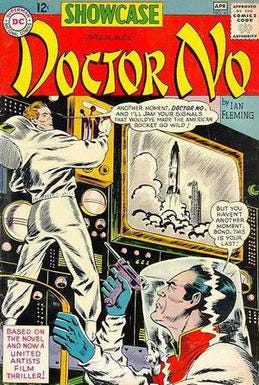
The company that has trainwrecked its way through both modern and classic high fantasy has now taken creative control of an ideal of masculine power, and they hate masculine power.
We all know that Amazon will utterly fuck up James Bond. The only real question is how badly and how much?
They are off to a decent start, deleting all of the guns out of James Bond’s posters and then putting them back in again. They’ll probably be deleting anything that hints at ‘fifty noes and one yes, means, yes.’ But in this age, where there is a TORRENT, of ways to keep the original versions safe, we should be more worried about Bond’s future — Because he doesn’t have one. Not with Amazon holding creative control.
The thing is, it really wouldn’t matter who has creative control of James Bond.
The fundamental problem with James Bond can be found in the answer to this question: Is the Western world still worth committing murder to protect?
When James Bond was created, the answer was an emphatic, yes.
Let’s unpack the real 007’s world.
James Bond was born in the 1950s Cold War, but that was the literary version. The middle-aged guy with a thin scar on his face and a cruel mouth. A blunt instrument in service to the waning days of the Empire.
But that’s not the guy most people think of when they think Bond. They’re thinking of the movies. And that Bond is the product of Kennedy-era internationalism.
He belonged to a Britain that was trying to find its place as a former Great Power. One that wanted to hang on to its importance in the world by being seen as a special and invaluable partner of the United States. Consider; how many of Sean Connery’s Bond movies were spent defending the interests of the United States? Dr. No, Thunderball, Goldfinger, You Only Live Twice, Diamonds Are Forever. The only time he was taking care of a strictly UK problem was in From Russia With Love.
However, in the sixties, the British Empire still carried emotional weight. It had been the biggest dog in any yard for centuries, and while dozens of countries were being given independence (or having it forced on them because London couldn’t afford to keep them), the emotional memory of power was still fresh.
James Bond also belonged to a nearly mythic class of people called the Jet Set.
In the 1950s, an international flight in a piston engine, prop-driven DC-7 was an eleven-hour, deafening, sweat-drenched, bone-jarring, exhausting hell. You had to shout to be heard, and the vibrations were an hour-long full-body jackhammering. You only flew if time was of the essence; otherwise, you booked passage on the SS United States for a four day voyage in opulent (and surprisingly affordable) luxury where you would “dress” for dinner, go dancing, and be entertained by Sinatra.
But in 1960, the Boeing 707 had ushered in a brand new world where it only took 6 hours to go from New York to Paris in (comparatively) quiet comfort. And an instant celebrity class had been created that lived by and within this new mobility. Breakfast at Tiffany’s and dinner at La Tour D’Argent. Jet travel was suddenly regular enough, reliable enough, and above all – exclusive enough to create this planet-hopping elite lifestyle. There were only a few thousand people in it – it was a matter of those who know… know.
Among the genuine Jet Set, there existed a powerful but unspoken sense of fraternity — a shared understanding that they were part of something new, rare, and ephemeral. They might not have known each other personally, but they recognized one another instantly by accent, dress, and bearing, and they shared the same circuit of hotels, clubs, and airports. The Lido, Harry’s Bar, Maxim’s, The Dorchester, and Idelwild, if you were in these places, you were among your own kind. The men wore suits from Savile Row, and the women were dressed by Coco Chanel. They were the apex of the mid-century modern world. Nearly mythic international celebrities whose world was sleek curves of chrome and smooth surfaces of the atomic age. There was a code of conduct among them. Names were never dropped but implied. Money was never mentioned, but taste was all.
And James Bond was one of them.
In fact, he was inseparable from them.
He taught this new moneyed class of young men how to dress for dinner. What watches to wear. What car to drive. What was the best champagne to ask for. He functioned as a masculine identity. Before Dr. No, men still looked to old money for aspirational goals, but Bond became the instruction manual for this new generation of freshly wealthy self-made men. Who cares - who gives a shit if old money looks down on us? We have more money. And Bond taught them how to spend it.
Flemming’s Bond had been a “blunt instrument.” But Connery’s Bond was Britain’s smooth brand ambassador. He was cultural sophistication as an export.
James Bond was a man in confident but rigid control of himself. Which is probably why narcotics were the only addiction he didn’t have.
-Smoking: 60 to70 custom-made Morland’s cigarettes per day. Carried in a black gun metal case. A hand rolled mix of Balkan and Turkish tobacco in white paper with three gold lines (his Naval rank of Commander). Slow burning, instantly recognizable to men and especially women of taste. The smoke’s scent was closer to pipe tobacco. Completely unfiltered, naturally.
-Drinking: (good lord): Breakfast: A stiff double vodka martini or a glass of something like “Haig and Haig.” Lunch: Half a bottle of wine, sometimes supplemented with a martini or two. Dinner: Another half-bottle to a full bottle of wine or champagne. Evening: Several whiskies or more martinis while gambling or winding down. Nightcap: Scotch and soda before bed — or occasionally in bed. 14 units a day. Today, 13 units a week is considered abusive.
However, Flemming described him as always drinking but never drunk. Although in From Russia with Love he downed 50 units of alcohol in 24 hours.
-Gambling: Every night if he had the option and that takes us to his biggest addiction…
-Risk Taking.
He was however, always a controlled addict. Smack, would have broken that control even though he would have been frequently exposed to Morphine during his hospital stays. And he was surprisingly rigid when it came to diet and exercise, so much so that it was almost like he was trying to balance his constant self destruction. His vodka martini instead of gin was part of it. It was cold and clean alcohol.
Sex didn’t seem like an addiction either. His lovelife, if such it could be called, was a string of frequent and melancholy affairs. He designed his relationships with failure built-in. He wasn’t going to be a husband or father and he knew he would be abysmal at both. Any wife was certain to be a widow and he’d been an orphan himself. His life was built on the premise that you have to burn to shine.
Bond was the masculine archetype of the managerial age: obedient, efficient, handsome, and utterly expendable. He was the West’s samurai — loyal to queen and country, stripped of faith and family, his only virtue was service itself. He knew he was at best a good monster, but he also knew he was a necessary one. That kind of man can’t exist in a culture that denies virtue, hierarchy, or even gender.
Patrick McGoohan was approached to play 007 before Connery and turned the job down flat because of his immorality. Bond’s vices were not approved of, nor were they meant to be. He was a flawed man you sent to do a rough job, he was an intelligence officer who could execute on his own authority and judgement. Which brings us back to my first question:
Is the Western world still worth committing murder to protect?
The moral high ground of the Cold War is gone.
Intelligence agencies are distrusted with good reason.
The British state is bureaucratic, cynical, and diminished.
The American-led world order is decadent and self-doubting.
A hero who kills for civilization becomes just a soulless hitman when civilization can’t agree on what it is — or if it deserves to survive. Today’s Bond can’t smoke, drink, gamble, or womanize. He can’t even believe in the nation he serves. So what’s left?
When the good guys no longer see themselves as good, Bond’s universe collapses.
That is the best short article I've read in years.
I have been slowly making my way through the novels. There is a Cold War coldness to the books not present in the movies.